History of healing plants goes back to remote past when natural herb treatment was the only solution to all kind of ailments.
Plants have the capability to synthesize a wide selection of chemical substances which are used to carry out important biological functions. A great number of chemicals have beneficial effects on long-term health when consumed by humans, and can be utilized to effectively treat human diseases. There are actually hundreds, maybe even thousands, of plants with medicinal value. You can create a Healing Garden, grow your own medicinal plants, and fill your life with beauty, fragrance and time-tested remedies for common ailments. In this article you will discover what exactly are the valuable healing plants that you can grow right in your very own garden space.
Find below The list of Top 10 Amazing Healing Plants for Your Garden.
This information is solely for informational purposes, and not intended to provide medical advice.
10. Feverfew (Tanacetum parthenium)
 |
| PD |
|
 |
| Blok888 License CC BY-SA 3.0 |
|
Feverfew has an interesting history. Ancient Greek physicians used it to reduce inflammation and treat menstrual cramps.Traditional uses of feverfew have included fevers, headaches, stomach aches, toothaches, insect bites, infertility, and problems with menstruation and with labor during childbirth. Newer folk or traditional uses for feverfew include migraine headaches, rheumatoid arthritis, psoriasis, allergies, asthma, tinnitus (ringing or roaring sounds in the ears), dizziness, nausea, and vomiting.
9. Rosemary (Rosmarinus officinalis)
 |
| PD |
|
|
Rosemary is a fragrant evergreen herb native to the Mediterranean. It is used as a culinary condiment, to make bodily perfumes, and for its potential health benefits.
Since ancient times Rosemary was traditionally used to help alleviate muscle pain, improve memory, boost the immune and circulatory system, and promote hair growth. It is also used for digestion problems, including heartburn, intestinal gas (flatulence), liver and gallbladder complaints, loss of appetite, cough, headache, high blood pressure, and reducing age-related memory loss. Some women use rosemary for increasing menstrual flow and causing abortions.
8. Lavender (Lavandula angustifolia)
 |
| PD |
|
 |
| Blok888 License CC BY-SA 3.0 |
|
Lavender's flowers and leaves are used as an herbal medicine, either in the form of lavender oil or as an herbal tea. Lavender essential oil, when diluted with a carrier oil, is commonly used as a relaxant with massage therapy. It is also used for a variety of digestive complaints including abdominal swelling from gas in the intestinal or peritoneal cavity, loss of appetite, vomiting, nausea, intestinal gas, and upset stomach. Some people use lavender for painful conditions including migraine headaches, toothaches, sprains, nerve pain, sores, and joint pain. It is also used for acne and cancer, and to promote menstruation. Lavender is applied to the skin for hair loss and pain, and to repel mosquitoes and other insects. Some people add lavender to bathwater to treat circulation disorders and improve mental well being. By inhalation, lavender is used as aromatherapy for insomnia, pain, and agitation related to dementia.
7. Celery (Apium graveolens)
 |
| PD |
|
|
Celery has a long history of use and is really a very old healing food. The effects of celery on the human body are diuretic, expectorant, carminative, anti-asthmatic, and digestive aid. Celery is a great source of vitamin K, vitamin C, potassium, folate, and fiber. Moreover it contains molybdenum, manganese, vitamin B1, vitamin B2, vitamin B6, calcium, magnesium, phosphorus, iron, and tryptophan. Celery additionally contains about 35 milligrams of an advantageous sodium complex, this is useful in lowering stomach acid levels and also increasing our hydrochloric acid levels that might enhances digestive function.
Celery has been used for ages in Chinese medication to reduce high blood pressure. It is believed that the phthalides in celery relax the arteries and allow the vessels to dilate which allows the blood stream to circulate a lot more freely. These phthalides also relieve our stress hormones and lower our blood pressure. Celery is furthermore a great source of potassium, calcium and magnesium, all of which have been connected with reduced high blood pressure.
6. Peppermint (Mentha piperita)
 |
| PD |
|
|
Peppermint has a long tradition of medicinal use, with archaeological evidence placing its use at least as far back as ten thousand years ago. It also contains the substance rosmarinic acid, which has several actions that are beneficial in asthma. In addition to its antioxidant abilities to neutralize free radicals, rosmarinic acid has been shown to block the production of pro-inflammatory chemicals, such as leukotrienes. It also encourages cells to make substances that keep the airways open for easy breathing. Extracts of peppermint have also been shown to help relieve the nasal symptoms of allergic rhinitis (colds related to allergy).
Peppermint contains a wide range of traditional nutrients such as manganese, copper, and vitamin C. Vitamin C seems to play a role in decreasing colorectal cancer risk. It is the main water-soluble antioxidant in the body is needed to decrease levels of free radicals that can cause damage to cells.
5. Catnip (Nepeta cataria)
 |
| PD |
|
|
Medicinally, Catnip plant has been used to treat intestinal cramps, for indigestion, to cause sweating, to induce menstruation, as a sedative, and to increase appetite. Additionally, the plant has been used to treat diarrhea, colic, the common cold, and cancer. In Appalachia, nervous conditions, stomach ailments, hives, and the common cold have been treated with catnip tea. The dried leaves have been smoked to relieve respiratory ailments, and a poultice has been used externally to reduce swelling. In the early 1900s, the flowering tops and leaves were used to induce delayed menses. During the 1960s, catnip was reportedly smoked for its euphoric effects.
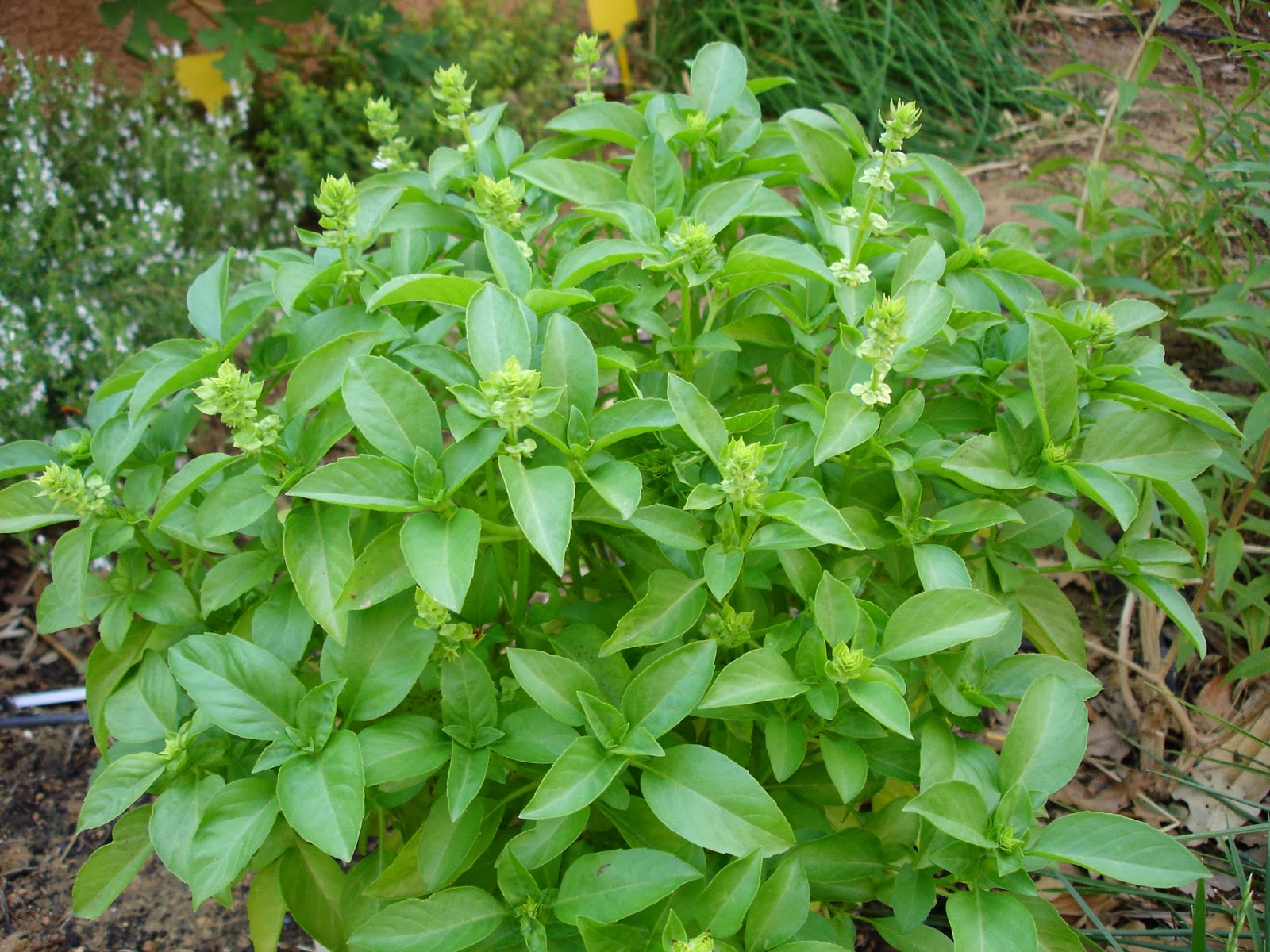
4. Sweet basil (Ocimum basilicum)
 |
| PD |
|
|
Sweet basil contains rich source of vitamin K, beta carotene, and iron, the plant is known to harness anti-bacterial, anti-inflammatory, and antioxidant properties. The majority of the great benefits of basil can be attributed to its volatile oils and flavonoids - powerful, plant-based antioxidants that reduce inflammation, help fight aging, and promote healthy arteries. In basil essential oil, the volatile oils within the plant have been shown to have incredible antibacterial properties. Recently, there has been much research into the health benefits conferred by the essential oils found in Sweet basil. Scientific studies have established that compounds in basil oil have potent antioxidant, antiviral, and antimicrobial properties, and potential for use in treating cancer. It is traditionally used for supplementary treatment of stress, asthma and diabetes in India.
3. Great Burdock (Arctium lappa)
 |
| PD |
|
 |
| PD |
|
Burdock has an ancient and respected reputation as a nutritive liver tonic that helps to clean and build the blood, while its diuretic action of burdock helps in the elimination of waste materials. Taken internally, this root promotes sweating and the elimination of harmful high levels of uric acid via the kidneys. Rich in minerals, this plant is used as a food by many cultures. Burdock helps to cleanse the body from the inside out and is most useful in those conditions that can be traced back to liver disorders or a general overload of toxins in the system including problem skin. Burdock may also play a useful role in helping to control blood sugar levels due to the inulin content of the root. In Europe, the fresh root is used for lowering blood sugar, its inulin content making it particularly suitable for diabetes.
2. Dandelion (Taraxacum officinale)
 |
| PD |
|
|
Although many people consider The Dandelion (Taraxacum officinale) as a pesky weed, in fact this plant is full of vitamins A, B, C, and D, as well as minerals such as iron, potassium, and zinc. Dandelion leaves are utilized to add flavor to salads, sandwiches, and also teas. The roots are used in certain coffee substitutes, and the flowers have been used to make wines. In earlier times, dandelion roots and leaves were accustomed to handle liver disorders. Native Americans also boiled dandelion in water and consumed it to deal with kidney disease, swelling, skin problems, heartburn symptoms, as well as upset digestive system. In traditional Chinese medication, dandelion has been utilized to cure stomach problems, appendicitis, and breast problems, such as inflammation or insufficient milk flow. In European countries, it had been utilized in treatments for fever, boils, eye problems, diabetic issues, and diarrhea. Nowadays, the roots are mainly used to stimulate the appetite, and for liver and gallbladder issues. Dandelion leaves are utilized as a diuretic to help out the body reduce excessive fluid. So far, there have not been any good quality scientific research on Taraxacum officinale.
1. Aloe vera
 |
| PD |
|
|
Aloe Vera contains over 200 active components including vitamins, minerals, amino acids, enzymes, polysaccharide, and fatty acids- no wonder it’s used for such a wide range of remedies. The bulk of the Aloe Vera leaf is filled with a clear gel-like substance, which is approximately 99% water. It is frequently cited as being used in herbal medicine since the beginning of the first century AD. Historically, Aloe vera was used topically to heal wounds and for various skin conditions, and orally as a
laxative. Today, in addition to these uses, aloe is used as a folk or traditional remedy for a variety of conditions, including diabetes, asthma, epilepsy, and osteoarthritis. It is also used topically for osteoarthritis, burns, sunburns, and psoriasis. Aloe vera gel can be found in hundreds of skin products, including lotions and sunblocks.




.jpg)


.jpg)
.JPG)
.jpg)


.jpg)

_at_sunset-Top+10+Most+Amazing+Geological+Wonders.jpg)


